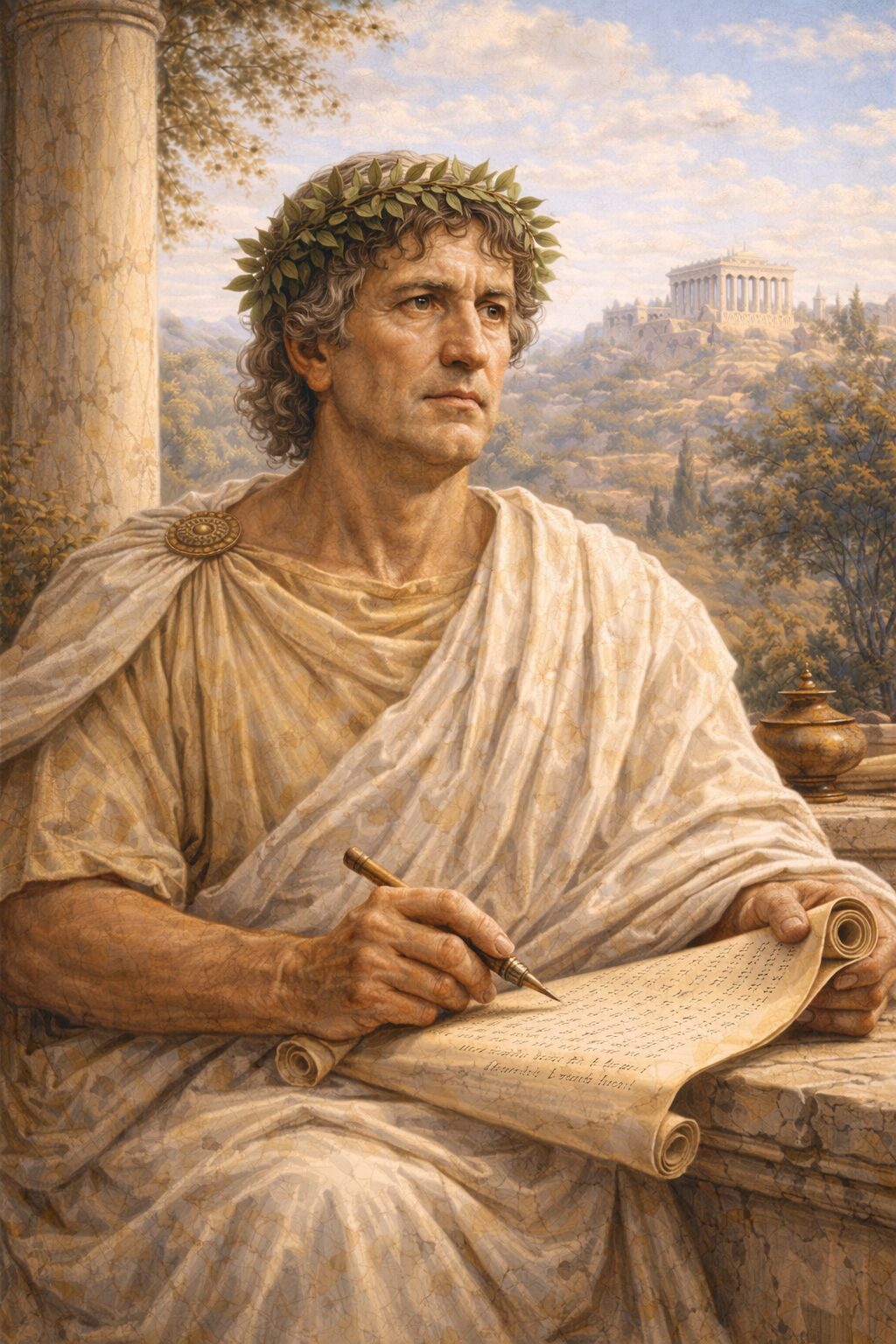
Publius Ovidius Naso (43 BC—17 AD), known in the English-speaking world as Ovid, was a Roman poet who is best known as the author of three major collections of poetry: poems of love, including the Ars Amatoria, written in his earlier years; antiquarian and mythological poems, including the Metamorphoses, in hexameters; and poems in elegiac verse, written after he was banished to Tomi, on the Black Sea, in 8 AD. Several additional works have been lost, including a tragedy, Medea.
Ovid belonged to a wealthy equestrian family and was educated in Rome and Athens. After holding two of the minor offices that typically led to a senatorial career, he withdrew from public life and devoted himself to poetry. This decision, he himself said, was due in part to his delicate physique, but scholars believe the chief reasons were probably his love of poetry and pleasure and his aversion to serious affairs.
During his lifetime, Ovid’s poetry was both famous and criticized, but he became one of the best-known and most-loved Roman poets. He is considered a master of the elegiac couplet and is traditionally ranked alongside Virgil and Horace as one of the three canonic poets of Latin literature. His poetry, much imitated during Late Antiquity and the Middle Ages, greatly influenced European art and literature and remains one of the most important sources of classical mythology.