Secure checkout · Free US shipping on orders over $50
Classics
By Homer
$16.95
Secure checkout · Free US shipping on orders over $50
To render an ancient Greek text with its richly nuanced meanings and musical, rhythmic cadences in clear, accessible contemporary language without losing the effect of the original is an admirable achievement, exemplified by Ian Johnston’s translation of Homer’s Odyssey. From the opening invocation of the goddess of poetry—“Muse, speak to me now of that resourceful man / who wandered far and wide after ravaging / the sacred citadel of Troy”—to Odysseus’s meeting with the princess, Nausicaa—“He emerged, moving just like / a mountain lion which relies on its own strength--/ . . . its two eyes burning, coming in among the herd/ of sheep or cattle, or stalking a wild deer . . .”—to his narrative of the Underworld—“Then out of Erebus came swarming up/ shades of the dead—brides, young unmarried men, / old ones worn out with toil, young tender girls, /. . . and many men /wounded by bronze spears, who’d died in war”—to the hero’s arduous adventures taking them between the cavernous whirlpool Charybdis and the monster preying on his crew from the opposing cliffs—“Then, in the entrance of her cave, Scylla/ devoured the men, who still kept screaming, /stretching out their arms in my direction, / as they met their painful deaths”— and finally to his homecoming distinguished by his performance in the famous contest—“just as someone really skilled / at playing the lyre and singing has no trouble/ when he loops a string around a brand new peg, / . . . that’s how easily Odysseus strung that great bow. / Holding it in his right hand, he tried the string. / It sang out, resonating like a swallow’s song”—Johnson brings the dactylic rhythms, vivid imagery, elaborate similes, colorful characters, sheer adventure, and exquisite artistry of Homer’s text alive for contemporary students.
Daniel R White
Professor of Philosophy
Honors College
Florida Atlantic University
Ian Johnston has pulled it off: at last we have an Odyssey in English which is as natural, direct, and straightforward as the original Greek but which loses nothing of Homer\'s music. A model translation, ideal for students and lovers of poetry alike -- this is an Odyssey which sings.
Professor Jack Mitchell
Department of Classics
College of the Holy Cross
Excellent translation, easy to read, wonderful entry to epic Greek poems.
To render an ancient Greek text with its richly nuanced meanings and musical, rhythmic cadences in clear, accessible contemporary language without losing the effect of the original is an admirable achievement, exemplified by Ian Johnston’s translation of Homer’s Odyssey. From the opening invocation of the goddess of poetry—“Muse, speak to me now of that resourceful man / who wandered far and wide after ravaging / the sacred citadel of Troy”—to Odysseus’s meeting with the princess, Nausicaa—“He emerged, moving just like / a mountain lion which relies on its own strength--/ . . . its two eyes burning, coming in among the herd/ of sheep or cattle, or stalking a wild deer . . .”—to his narrative of the Underworld—“Then out of Erebus came swarming up/ shades of the dead—brides, young unmarried men, / old ones worn out with toil, young tender girls, /. . . and many men /wounded by bronze spears, who’d died in war”—to the hero’s arduous adventures taking them between the cavernous whirlpool Charybdis and the monster preying on his crew from the opposing cliffs—“Then, in the entrance of her cave, Scylla/ devoured the men, who still kept screaming, /stretching out their arms in my direction, / as they met their painful deaths”— and finally to his homecoming distinguished by his performance in the famous contest—“just as someone really skilled / at playing the lyre and singing has no trouble/ when he loops a string around a brand new peg, / . . . that’s how easily Odysseus strung that great bow. / Holding it in his right hand, he tried the string. / It sang out, resonating like a swallow’s song”—Johnson brings the dactylic rhythms, vivid imagery, elaborate similes, colorful characters, sheer adventure, and exquisite artistry of Homer’s text alive for contemporary students.
Daniel R White
Professor of Philosophy
Honors College
Florida Atlantic University
Ian Johnston has pulled it off: at last we have an Odyssey in English which is as natural, direct, and straightforward as the original Greek but which loses nothing of Homer\\\'s music. A model translation, ideal for students and lovers of poetry alike -- this is an Odyssey which sings.
Professor Jack Mitchell
Department of Classics
College of the Holy Cross
Excellent translation, easy to read, wonderful entry to epic Greek poems.
To render an ancient Greek text with its richly nuanced meanings and musical, rhythmic cadences in clear, accessible contemporary language without losing the effect of the original is an admirable achievement, exemplified by Ian Johnston’s translation of Homer’s Odyssey. From the opening invocation of the goddess of poetry—“Muse, speak to me now of that resourceful man / who wandered far and wide after ravaging / the sacred citadel of Troy”—to Odysseus’s meeting with the princess, Nausicaa—“He emerged, moving just like / a mountain lion which relies on its own strength--/ . . . its two eyes burning, coming in among the herd/ of sheep or cattle, or stalking a wild deer . . .”—to his narrative of the Underworld—“Then out of Erebus came swarming up/ shades of the dead—brides, young unmarried men, / old ones worn out with toil, young tender girls, /. . . and many men /wounded by bronze spears, who’d died in war”—to the hero’s arduous adventures taking them between the cavernous whirlpool Charybdis and the monster preying on his crew from the opposing cliffs—“Then, in the entrance of her cave, Scylla/ devoured the men, who still kept screaming, /stretching out their arms in my direction, / as they met their painful deaths”— and finally to his homecoming distinguished by his performance in the famous contest—“just as someone really skilled / at playing the lyre and singing has no trouble/ when he loops a string around a brand new peg, / . . . that’s how easily Odysseus strung that great bow. / Holding it in his right hand, he tried the string. / It sang out, resonating like a swallow’s song”—Johnson brings the dactylic rhythms, vivid imagery, elaborate similes, colorful characters, sheer adventure, and exquisite artistry of Homer’s text alive for contemporary students.
Daniel R White
Professor of Philosophy
Honors College
Florida Atlantic University
Ian Johnston has pulled it off: at last we have an Odyssey in English which is as natural, direct, and straightforward as the original Greek but which loses nothing of Homer\\\'s music. A model translation, ideal for students and lovers of poetry alike -- this is an Odyssey which sings.
Professor Jack Mitchell
Department of Classics
College of the Holy Cross
Excellent translation, easy to read, wonderful entry to epic Greek poems.
To render an ancient Greek text with its richly nuanced meanings and musical, rhythmic cadences in clear, accessible contemporary language without losing the effect of the original is an admirable achievement, exemplified by Ian Johnston’s translation of Homer’s Odyssey. From the opening invocation of the goddess of poetry—“Muse, speak to me now of that resourceful man / who wandered far and wide after ravaging / the sacred citadel of Troy”—to Odysseus’s meeting with the princess, Nausicaa—“He emerged, moving just like / a mountain lion which relies on its own strength--/ . . . its two eyes burning, coming in among the herd/ of sheep or cattle, or stalking a wild deer . . .”—to his narrative of the Underworld—“Then out of Erebus came swarming up/ shades of the dead—brides, young unmarried men, / old ones worn out with toil, young tender girls, /. . . and many men /wounded by bronze spears, who’d died in war”—to the hero’s arduous adventures taking them between the cavernous whirlpool Charybdis and the monster preying on his crew from the opposing cliffs—“Then, in the entrance of her cave, Scylla/ devoured the men, who still kept screaming, /stretching out their arms in my direction, / as they met their painful deaths”— and finally to his homecoming distinguished by his performance in the famous contest—“just as someone really skilled / at playing the lyre and singing has no trouble/ when he loops a string around a brand new peg, / . . . that’s how easily Odysseus strung that great bow. / Holding it in his right hand, he tried the string. / It sang out, resonating like a swallow’s song”—Johnson brings the dactylic rhythms, vivid imagery, elaborate similes, colorful characters, sheer adventure, and exquisite artistry of Homer’s text alive for contemporary students.
Daniel R White
Professor of Philosophy
Honors College
Florida Atlantic University
Ian Johnston has pulled it off: at last we have an Odyssey in English which is as natural, direct, and straightforward as the original Greek but which loses nothing of Homer\\\\\\\'s music. A model translation, ideal for students and lovers of poetry alike -- this is an Odyssey which sings.
Professor Jack Mitchell
Department of Classics
College of the Holy Cross
Excellent translation, easy to read, wonderful entry to epic Greek poems.
To render an ancient Greek text with its richly nuanced meanings and musical, rhythmic cadences in clear, accessible contemporary language without losing the effect of the original is an admirable achievement, exemplified by Ian Johnston’s translation of Homer’s Odyssey. From the opening invocation of the goddess of poetry—“Muse, speak to me now of that resourceful man / who wandered far and wide after ravaging / the sacred citadel of Troy”—to Odysseus’s meeting with the princess, Nausicaa—“He emerged, moving just like / a mountain lion which relies on its own strength--/ . . . its two eyes burning, coming in among the herd/ of sheep or cattle, or stalking a wild deer . . .”—to his narrative of the Underworld—“Then out of Erebus came swarming up/ shades of the dead—brides, young unmarried men, / old ones worn out with toil, young tender girls, /. . . and many men /wounded by bronze spears, who’d died in war”—to the hero’s arduous adventures taking them between the cavernous whirlpool Charybdis and the monster preying on his crew from the opposing cliffs—“Then, in the entrance of her cave, Scylla/ devoured the men, who still kept screaming, /stretching out their arms in my direction, / as they met their painful deaths”— and finally to his homecoming distinguished by his performance in the famous contest—“just as someone really skilled / at playing the lyre and singing has no trouble/ when he loops a string around a brand new peg, / . . . that’s how easily Odysseus strung that great bow. / Holding it in his right hand, he tried the string. / It sang out, resonating like a swallow’s song”—Johnson brings the dactylic rhythms, vivid imagery, elaborate similes, colorful characters, sheer adventure, and exquisite artistry of Homer’s text alive for contemporary students.
Daniel R White
Professor of Philosophy
Honors College
Florida Atlantic University
Ian Johnston has pulled it off: at last we have an Odyssey in English which is as natural, direct, and straightforward as the original Greek but which loses nothing of Homer\\\'s music. A model translation, ideal for students and lovers of poetry alike -- this is an Odyssey which sings.
Professor Jack Mitchell
Department of Classics
College of the Holy Cross
Excellent translation, easy to read, wonderful entry to epic Greek poems.
To render an ancient Greek text with its richly nuanced meanings and musical, rhythmic cadences in clear, accessible contemporary language without losing the effect of the original is an admirable achievement, exemplified by Ian Johnston’s translation of Homer’s Odyssey. From the opening invocation of the goddess of poetry—“Muse, speak to me now of that resourceful man / who wandered far and wide after ravaging / the sacred citadel of Troy”—to Odysseus’s meeting with the princess, Nausicaa—“He emerged, moving just like / a mountain lion which relies on its own strength--/ . . . its two eyes burning, coming in among the herd/ of sheep or cattle, or stalking a wild deer . . .”—to his narrative of the Underworld—“Then out of Erebus came swarming up/ shades of the dead—brides, young unmarried men, / old ones worn out with toil, young tender girls, /. . . and many men /wounded by bronze spears, who’d died in war”—to the hero’s arduous adventures taking them between the cavernous whirlpool Charybdis and the monster preying on his crew from the opposing cliffs—“Then, in the entrance of her cave, Scylla/ devoured the men, who still kept screaming, /stretching out their arms in my direction, / as they met their painful deaths”— and finally to his homecoming distinguished by his performance in the famous contest—“just as someone really skilled / at playing the lyre and singing has no trouble/ when he loops a string around a brand new peg, / . . . that’s how easily Odysseus strung that great bow. / Holding it in his right hand, he tried the string. / It sang out, resonating like a swallow’s song”—Johnson brings the dactylic rhythms, vivid imagery, elaborate similes, colorful characters, sheer adventure, and exquisite artistry of Homer’s text alive for contemporary students.
Daniel R White
Professor of Philosophy
Honors College
Florida Atlantic University
Ian Johnston has pulled it off: at last we have an Odyssey in English which is as natural, direct, and straightforward as the original Greek but which loses nothing of Homer\\\\\\\'s music. A model translation, ideal for students and lovers of poetry alike -- this is an Odyssey which sings.
Professor Jack Mitchell
Department of Classics
College of the Holy Cross
Excellent translation, easy to read, wonderful entry to epic Greek poems.
To render an ancient Greek text with its richly nuanced meanings and musical, rhythmic cadences in clear, accessible contemporary language without losing the effect of the original is an admirable achievement, exemplified by Ian Johnston’s translation of Homer’s Odyssey. From the opening invocation of the goddess of poetry—“Muse, speak to me now of that resourceful man / who wandered far and wide after ravaging / the sacred citadel of Troy”—to Odysseus’s meeting with the princess, Nausicaa—“He emerged, moving just like / a mountain lion which relies on its own strength--/ . . . its two eyes burning, coming in among the herd/ of sheep or cattle, or stalking a wild deer . . .”—to his narrative of the Underworld—“Then out of Erebus came swarming up/ shades of the dead—brides, young unmarried men, / old ones worn out with toil, young tender girls, /. . . and many men /wounded by bronze spears, who’d died in war”—to the hero’s arduous adventures taking them between the cavernous whirlpool Charybdis and the monster preying on his crew from the opposing cliffs—“Then, in the entrance of her cave, Scylla/ devoured the men, who still kept screaming, /stretching out their arms in my direction, / as they met their painful deaths”— and finally to his homecoming distinguished by his performance in the famous contest—“just as someone really skilled / at playing the lyre and singing has no trouble/ when he loops a string around a brand new peg, / . . . that’s how easily Odysseus strung that great bow. / Holding it in his right hand, he tried the string. / It sang out, resonating like a swallow’s song”—Johnson brings the dactylic rhythms, vivid imagery, elaborate similes, colorful characters, sheer adventure, and exquisite artistry of Homer’s text alive for contemporary students.
Daniel R White
Professor of Philosophy
Honors College
Florida Atlantic University
Ian Johnston has pulled it off: at last we have an Odyssey in English which is as natural, direct, and straightforward as the original Greek but which loses nothing of Homer\\\\\\\'s music. A model translation, ideal for students and lovers of poetry alike -- this is an Odyssey which sings.
Professor Jack Mitchell
Department of Classics
College of the Holy Cross
Excellent translation, easy to read, wonderful entry to epic Greek poems.
To render an ancient Greek text with its richly nuanced meanings and musical, rhythmic cadences in clear, accessible contemporary language without losing the effect of the original is an admirable achievement, exemplified by Ian Johnston’s translation of Homer’s Odyssey. From the opening invocation of the goddess of poetry—“Muse, speak to me now of that resourceful man / who wandered far and wide after ravaging / the sacred citadel of Troy”—to Odysseus’s meeting with the princess, Nausicaa—“He emerged, moving just like / a mountain lion which relies on its own strength--/ . . . its two eyes burning, coming in among the herd/ of sheep or cattle, or stalking a wild deer . . .”—to his narrative of the Underworld—“Then out of Erebus came swarming up/ shades of the dead—brides, young unmarried men, / old ones worn out with toil, young tender girls, /. . . and many men /wounded by bronze spears, who’d died in war”—to the hero’s arduous adventures taking them between the cavernous whirlpool Charybdis and the monster preying on his crew from the opposing cliffs—“Then, in the entrance of her cave, Scylla/ devoured the men, who still kept screaming, /stretching out their arms in my direction, / as they met their painful deaths”— and finally to his homecoming distinguished by his performance in the famous contest—“just as someone really skilled / at playing the lyre and singing has no trouble/ when he loops a string around a brand new peg, / . . . that’s how easily Odysseus strung that great bow. / Holding it in his right hand, he tried the string. / It sang out, resonating like a swallow’s song”—Johnson brings the dactylic rhythms, vivid imagery, elaborate similes, colorful characters, sheer adventure, and exquisite artistry of Homer’s text alive for contemporary students.
Daniel R White
Professor of Philosophy
Honors College
Florida Atlantic University
Ian Johnston has pulled it off: at last we have an Odyssey in English which is as natural, direct, and straightforward as the original Greek but which loses nothing of Homer\\\\\\\\\\\\\\\'s music. A model translation, ideal for students and lovers of poetry alike -- this is an Odyssey which sings.
Professor Jack Mitchell
Department of Classics
College of the Holy Cross
Excellent translation, easy to read, wonderful entry to epic Greek poems.
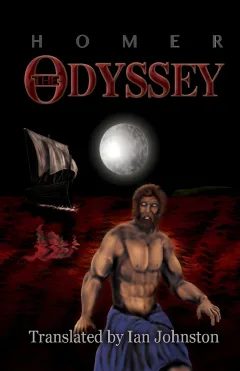
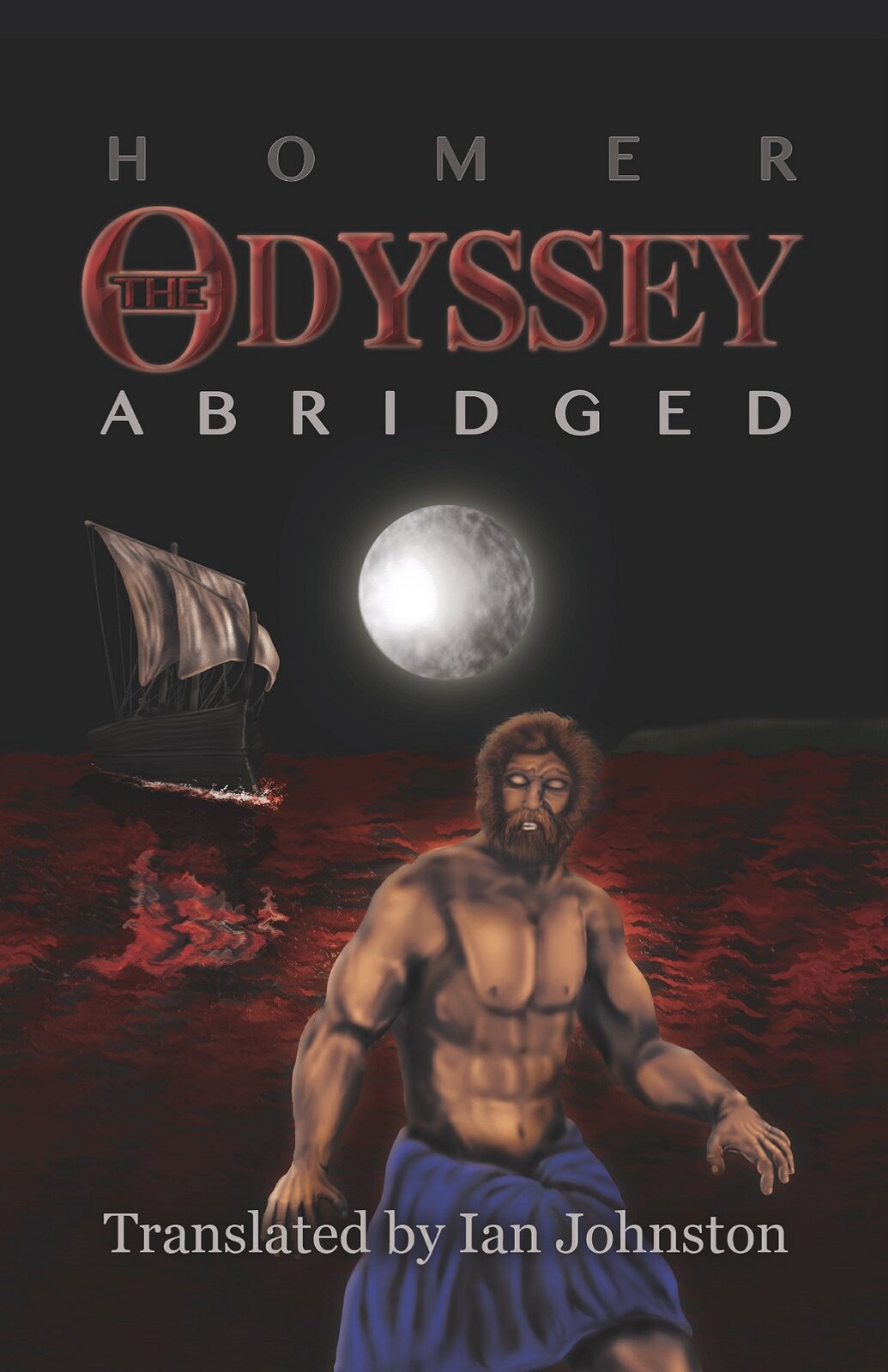
The Odyssey Abridged
$16.95