Skip to content

Classics

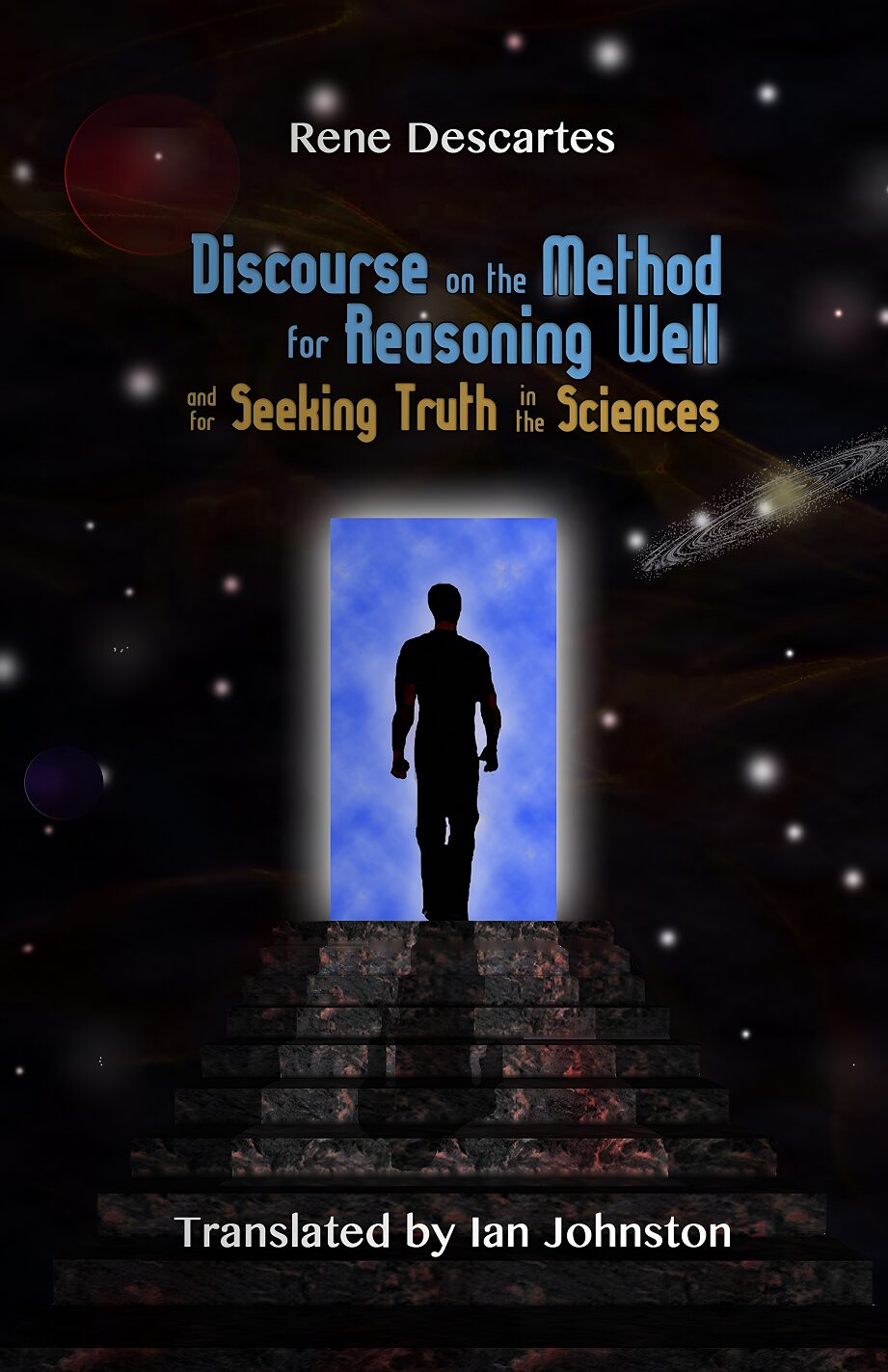
Discourse on the Method for Reasoning Well and for Seeking Truth in the Sciences

By Decartes, René

$9.95

Secure checkout · Free US shipping on orders over $50

Discourse on Method, published in 1637, is one of the most important works in the history of modern science. In this slim book, Descartes ostensibly sets out to inform the reader, in a modest, informal, and very readable style, of his own educational development and pursuit of knowledge. However, by the end he has set down a revolutionary new program for investigating the truth and laid the preliminary groundwork for Western civilization’s most important and most influential achievement, modern science. He does this by launching a famous thought experiment, in which he places everything in doubt, rejects all received knowledge, and searches for a single certain truth from which he can begin. This process leads to his famous claim “I think; therefore, I am.” Once that is established, Descartes then analyzes his criteria for knowledge of the truth, sets down a method, and reviews some of the discoveries this new method has enabled him to make. Descartes’ method, which radically separates the knowing mind from a soulless natural world operating on mechanical principles, which insists that mathematics is the key to understanding nature, which pleads for more experiments to confirm the validity of hypotheses, and which sets down as the major purpose of the endeavour the desire to make human beings the masters and possessors of nature, so that we can improve human lives (especially through advances in medicine) launches what we call modern science. The book is thus an essential text in the history of ideas. Ian Johnston’s new translation is accompanied by a few explanatory footnotes to assist the reader and an introductory essay which discusses in more detail some important features of Descartes’ argument and its influence.
Category
Classics
ISBN (softcover)
978-1-935238-75-1
e-ISBN
978-1-935238-72-0
  • I would like to express my sincere thanks for your translation of Nietzsche\'s Genealogy of Morals. I am using it this semester in my Introduction to Philosophy course. I find it forceful and accurate, successfully capturing the spirit of the work, and my students find it stimulating and interesting to read. It is wonderful that you have made such a fine contribution to scholarship. (Rhode Island)

    ______


    I am not a student or academic. In my spare time, I read philosophy and am coming to grips with Nietzsche. I bought a translation of \"The Genealogy of Morality (/Morals)\" by Maudemarie Clark and Peter Swensen, but found your translation of infinitely more value. It is much easier to understand.

    ______

    I have read your translation of Nietzsche\'s Toward a Genealogy of Morals and consider it to be far clearer than Kaufmann\'s.

    ______

    Your translation is wonderfully done. I wrote a paper on \"On the Use...\" in a graduate seminar and the copy from our library was stilted and awkward. Everything else I had read by Nietzsche was wonderfully fluid and poetic. I couldn\'t believe that the version from our library was by the same author. Your translation captures Nietzsche\'s poetic element wonderfully, bravo!

  • I would like to express my sincere thanks for your translation of Nietzsche\\\'s Genealogy of Morals. I am using it this semester in my Introduction to Philosophy course. I find it forceful and accurate, successfully capturing the spirit of the work, and my students find it stimulating and interesting to read. It is wonderful that you have made such a fine contribution to scholarship. (Rhode Island)

    ______


    I am not a student or academic. In my spare time, I read philosophy and am coming to grips with Nietzsche. I bought a translation of \\\"The Genealogy of Morality (/Morals)\\\" by Maudemarie Clark and Peter Swensen, but found your translation of infinitely more value. It is much easier to understand.

    ______

    I have read your translation of Nietzsche\\\'s Toward a Genealogy of Morals and consider it to be far clearer than Kaufmann\\\'s.

    ______

    Your translation is wonderfully done. I wrote a paper on \\\"On the Use...\\\" in a graduate seminar and the copy from our library was stilted and awkward. Everything else I had read by Nietzsche was wonderfully fluid and poetic. I couldn\\\'t believe that the version from our library was by the same author. Your translation captures Nietzsche\\\'s poetic element wonderfully, bravo!

  • I would like to express my sincere thanks for your translation of Nietzsche\\\'s Genealogy of Morals. I am using it this semester in my Introduction to Philosophy course. I find it forceful and accurate, successfully capturing the spirit of the work, and my students find it stimulating and interesting to read. It is wonderful that you have made such a fine contribution to scholarship. (Rhode Island)

    ______


    I am not a student or academic. In my spare time, I read philosophy and am coming to grips with Nietzsche. I bought a translation of \\\"The Genealogy of Morality (/Morals)\\\" by Maudemarie Clark and Peter Swensen, but found your translation of infinitely more value. It is much easier to understand.

    ______

    I have read your translation of Nietzsche\\\'s Toward a Genealogy of Morals and consider it to be far clearer than Kaufmann\\\'s.

    ______

    Your translation is wonderfully done. I wrote a paper on \\\"On the Use...\\\" in a graduate seminar and the copy from our library was stilted and awkward. Everything else I had read by Nietzsche was wonderfully fluid and poetic. I couldn\\\'t believe that the version from our library was by the same author. Your translation captures Nietzsche\\\'s poetic element wonderfully, bravo!

  • I would like to express my sincere thanks for your translation of Nietzsche\\\\\\\'s Genealogy of Morals. I am using it this semester in my Introduction to Philosophy course. I find it forceful and accurate, successfully capturing the spirit of the work, and my students find it stimulating and interesting to read. It is wonderful that you have made such a fine contribution to scholarship. (Rhode Island)

    ______


    I am not a student or academic. In my spare time, I read philosophy and am coming to grips with Nietzsche. I bought a translation of \\\\\\\"The Genealogy of Morality (/Morals)\\\\\\\" by Maudemarie Clark and Peter Swensen, but found your translation of infinitely more value. It is much easier to understand.

    ______

    I have read your translation of Nietzsche\\\\\\\'s Toward a Genealogy of Morals and consider it to be far clearer than Kaufmann\\\\\\\'s.

    ______

    Your translation is wonderfully done. I wrote a paper on \\\\\\\"On the Use...\\\\\\\" in a graduate seminar and the copy from our library was stilted and awkward. Everything else I had read by Nietzsche was wonderfully fluid and poetic. I couldn\\\\\\\'t believe that the version from our library was by the same author. Your translation captures Nietzsche\\\\\\\'s poetic element wonderfully, bravo!

Also from Classics

You might also like

Discourse on the Method for Reasoning Well and for Seeking Truth in the Sciences

$9.95