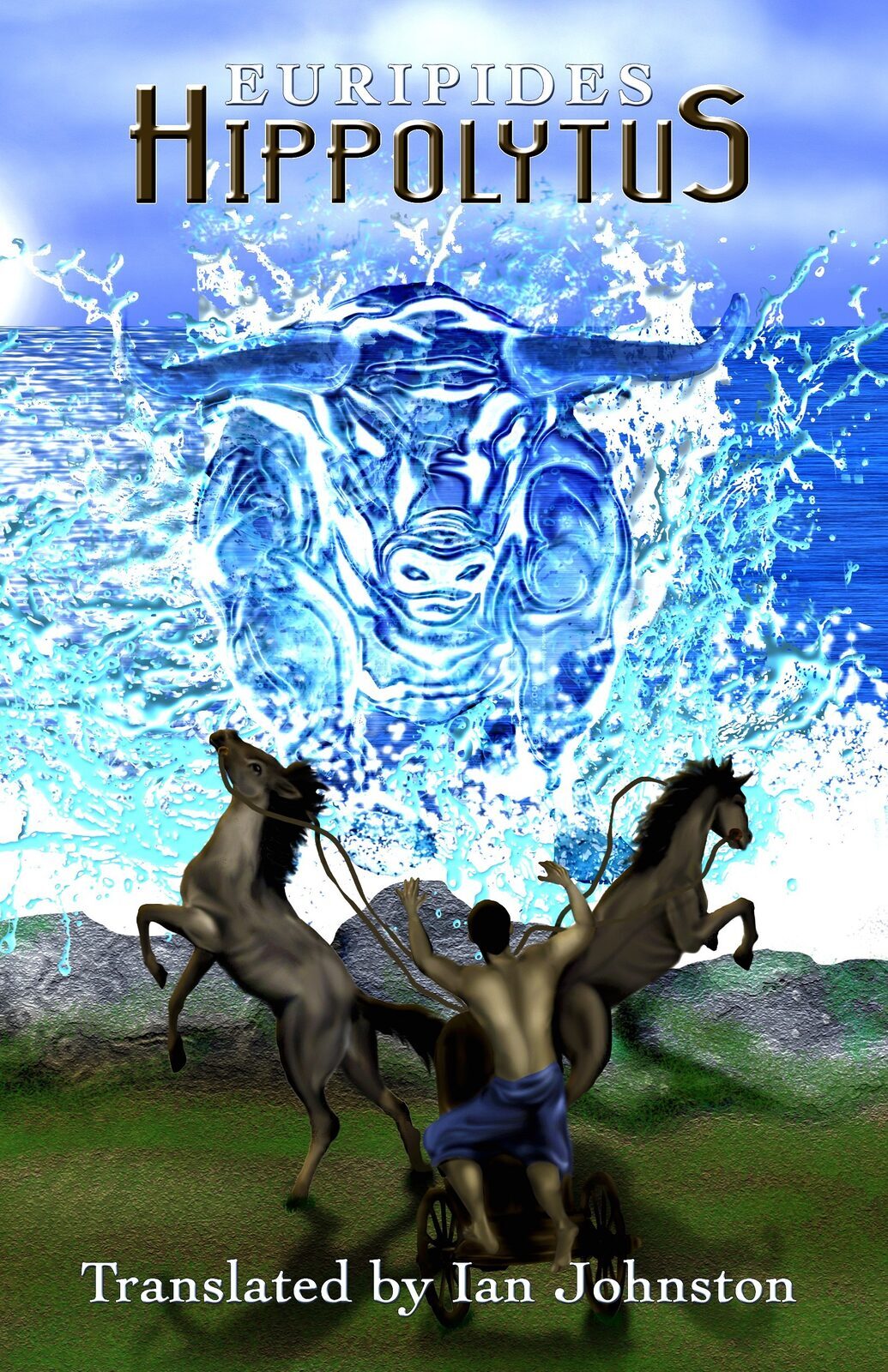
Hippolytus is one of nineteen surviving plays by the Greek tragedian Euripides (c. 480–406 BC), who also treated the same myth in an earlier play, now lost. The surviving play was first performed in Athens in 428 BC as part of a trilogy that won first prize in the Great Dionysia dramatic competition.
The play is set in Troezen, a city in the eastern Peloponnese. Theseus, king of Athens, has taken a year’s voluntary exile there, bringing his wife, Phaedra. Hippolytus, the king’s illegitimate son, was brought up in Troezen and has sworn a vow of chastity. The play turns on a competition between Artemis, the chaste goddess of the hunt, and Aphrodite, the goddess of love, who causes Phaedra to fall in love with Hippolytus. Aphrodite and Artemis appear at the beginning and end of the play, respectively, framing the action and representing the conflicting sentiments of passion and chastity.
Ian Johnston’s new translation of Hippolytus provides a fluent English version of this ancient play, well suited for reading, recitation, or performance. His rich contextual notes increase the reader’s understanding of the text and of classical Greek culture and mythology.